What's Behind Your Walls Matters More Than What's On Them
You've spent months thinking about the kitchen countertops. You have a folder of saved images for the primary ensuite tile. You know exactly what the front entry should feel like. That's all exactly as it should be: those are the details that make a custom home yours.
But before any of that conversation happens, the most important decisions about your home need to be made. They're the ones you'll never see once the walls close up: the insulation system, the air barrier, the ventilation strategy, the roofing material, the window specifications. In Calgary, those decisions don't just affect your energy bills. They determine whether your home holds up gracefully over decades or quietly accumulates damage you won't notice until it's expensive.
At HSH Builders, we take pride in building custom homes that will last.
Calgary's Climate Is Unlike Anywhere Else in Canada
Most Canadian cities deal with winter, but not the way we do in Calgary. Here, winter means volatility.
The defining feature of Calgary's climate isn't the cold, it's the chinooks. These warm, dry winds descend from the Rockies and can raise the temperature by 20°C or more within hours. These are thermal shock events, and they happen repeatedly all winter long.
The result is what engineers call the freeze-thaw cycle: water expands and contracts within building materials as temperatures swing above and below freezing, and each cycle widens existing cracks fractionally. This damage accumulates gradually, and is easy to overlook until problems become severe.
Calgary experiences approximately 90 - 110 freeze-thaw cycles annually. Every one of those cycles is a small stress test on your home's exterior. Water settles into pores and crevices, freezes and expands up to 9%, then thaws again, and this natural back-and-forth wears on every material it contacts, from roofing membranes to masonry to window frames.
Vinyl, aluminum, and wood all expand when heated and contract as temperatures drop. Over several winters, constant expansion and contraction can reduce the lifespan of windows and doors. Because of this, material quality and installation technique matter highly in Calgary's climate.
The solution is in the building envelope, and we know how to do it well to last through Calgary winters.
What "The Envelope" Actually Means
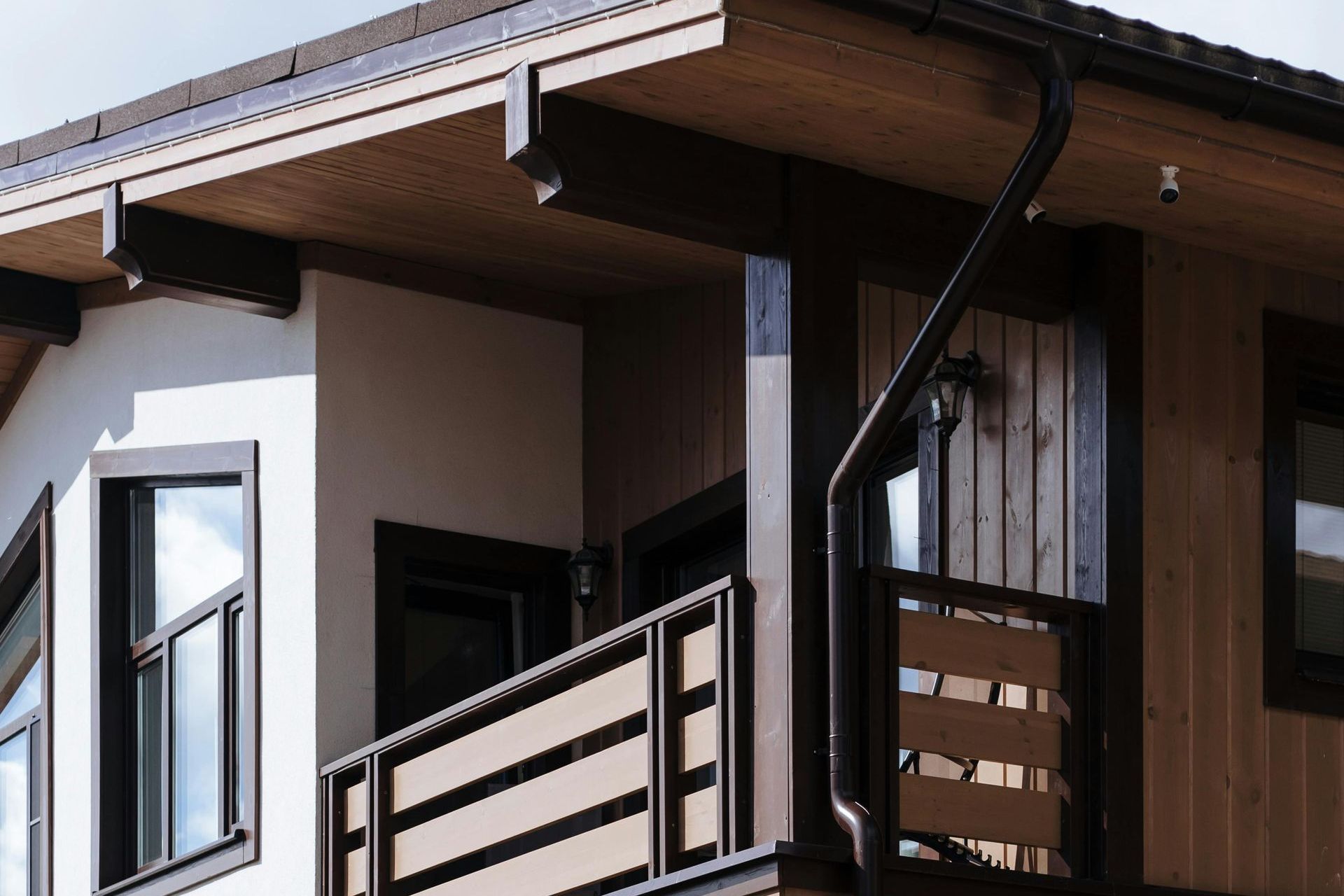
When builders talk about the outer layer of a home, like the roofing, walls, windows, doors, and foundation, taken together as a system, they're referring to what's known in the industry as the building envelope.
Think of it as your home's skin. Its job is to manage the boundary between the controlled environment inside and whatever is happening outside. Done well, it keeps heat in during February, keeps moisture out during spring melt, and keeps your home structurally stable through decades of Calgary weather.
Here's what a well-designed shell actually includes for a Calgary custom home:
Insulation that goes beyond code. The Alberta Building Code sets minimum insulation values, but minimum and sufficient aren't the same thing. High-performance custom homes typically use advanced insulation systems, such as spray foam, rigid board, or combinations, that create a continuous thermal barrier with no gaps. Gaps are where heat escapes and where condensation forms inside wall cavities.
An air barrier, properly installed. Insulation slows heat transfer, but it's the air barrier that stops the warm indoor air from physically moving through the wall and hitting cold materials. That contact is where moisture condenses. Heat escaping from the home, particularly due to poor insulation or ventilation, warms the roof deck, melts accumulated snow from the top down, and that meltwater flows to the colder eaves where it refreezes, forming ice dams, which eventually work their way under shingles and into your home's interior. A properly sealed, continuous air barrier is what prevents this.
Triple-pane windows. Installing low-E glass, insulated spacers, and weather-resistant frames helps stabilize indoor conditions during Calgary's temperature swings. In a climate where the temperature difference between inside and outside can exceed 40°C, we take special care to install glazing that will ensure airtight, watertight, and energy-efficient windows.
Class 4 impact-rated roofing. Calgary sits squarely in what insurance companies call "Hail Alley." According to the Insurance Bureau of Canada, hail is consistently one of the top three causes of property damage claims in Alberta, often surpassing floods and wildfires in cost. Repair costs have risen sharply, with roofing materials and labour now 30 - 50% higher than a decade ago. Class 4 impact-resistant shingles reduce the chance of damage by 15 times compared to standard shingles, and pay for themselves in about five years on average. On a luxury build, the roofing material choice also carries real aesthetic weight: metal roofing and premium synthetic options deliver Class 4 protection without sacrificing aesthetics.
HRVs: Bring Fresh Air Indoors
One of the counterintuitive consequences of building a well-sealed, energy-efficient home is that it doesn't breathe on its own. That's a feature, not a flaw, but it requires a mechanical solution.
This is where an HRV (heat recovery ventilator) comes in.
An HRV is a ventilation device that continuously replaces stale indoor air with fresh outdoor air. Modern homes are more airtight, which helps save energy, but can make indoor air stale. HRVs distribute fresh air throughout the house while recovering the heat from the outgoing air.
HRVs recover up to 85% of the heat from outgoing air and use it to warm the incoming air, which reduces the load on your heating system, saves energy, and lowers utility bills. In a city where heating a home is a months-long commitment, that efficiency compounds meaningfully.
For Calgary's predominantly dry weather, HRVs are more commonly recommended by experts than ERVs (energy recovery ventilators), which are better suited to more humid regions. The HRV keeps your home fresh, prevents moisture buildup in a sealed envelope, and maintains the air quality you'd expect from a home at this level.
Built Well From Day One
At HSH Builders, the reason we talk about climate performance early isn't to complicate the process, but because these decisions set the scene for the rest of the build, and determine the future of your custom home in a big way.
You can always change your countertops. You cannot easily retrofit a high-performance air barrier into a completed home. You cannot upgrade the roofing substrate after the fact without tearing off the roof. The decisions that determine how your home performs for the next 30 years are made at framing and rough-in stage, and they need to be made deliberately.
A custom home at this level deserves both: a shell that takes Calgary seriously, and an interior that reflects exactly who you are. We know how to do both expertly, so your house is exactly as you picture it when it’s all done, without compromise.