Building with the Future in Mind
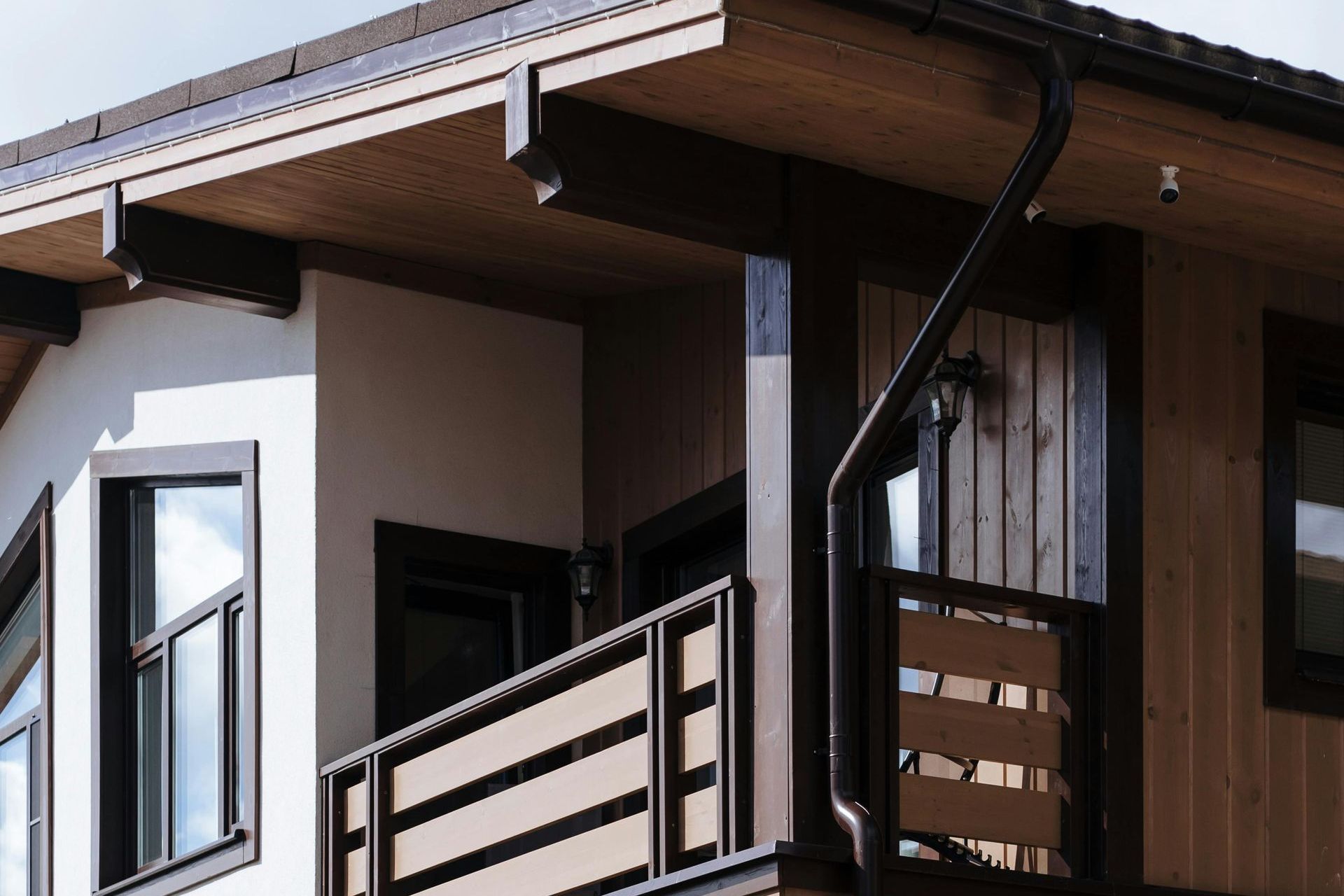
Let's imagine a home in southwest Calgary. In this home, there is a room on the main floor that has been, in sequence, a home office, a guest room, and, since last spring, a bedroom.
It’s not a spare bedroom, but a proper bedroom with a hospital-grade grab bar beside the en-suite door, a zero-threshold shower that was roughed in during construction, and a view of the backyard where, fifteen years ago, a daughter used to kick a soccer ball against the fence after school.
The daughter is in her second year of a PhD program in Toronto. The man sleeping in the room used to live forty minutes away, until his hip gave out last February and the reality of his situation changed overnight.
The room was designed for this. Not for him specifically; his son-in-law couldn't have predicted any of it in 2009, standing in a builder's office reviewing floor plans. But something in how the house was thought through allowed the room to become what the family needed it to become without a renovation, a contractor, or a crisis.
A Shift That's Already Happening
The multigenerational household is not a niche. According to Statistics Canada's 2021 Census, 2.4 million Canadians live in a multigenerational household, meaning a house with three or more generations under one roof. This number has grown by 50% since 2001. When you include households where parents and adult children co-reside without a third generation present, that figure expands to nearly 9.5 million people, or roughly one in five Canadians.
The federal government recognized this trajectory formally in 2023, introducing a Multigenerational Home Renovation Tax Credit of 15% on eligible renovation expenses up to a maximum of $7,500, specifically to help families add secondary suites for aging parents or adults with disabilities.
None of this is driven purely by economics, though economics play a role. Canada's population aged 65 and over reached nearly 20% in 2021, up from 13% in 2001, and is projected to reach 23% by 2031. Life expectancy at 65 is now 87.2 years for women and 84.5 years for men. Families are living alongside each other for longer, not as a workaround, but as a natural consequence of longer, healthier lives that still eventually change.
If you are building a custom home in your 40s or 50s, the question isn't whether your family's living arrangements will shift over the next 20 years. They will. The question is whether or not your home will absorb those changes gracefully.
What "Designed for It" Actually Looks Like
The room in the story above worked because of decisions that cost almost nothing at the time they were made and would cost a great deal to retrofit now.
The doorframe was framed at 36 inches rather than the standard 32. The bathroom was roughed in for a grab bar, meaning the walls were reinforced with blocking during construction so that a bar could be added years later by screwing into solid material rather than requiring a wall teardown. The shower was built curbless. At the time, it looked like a design preference. In practice, it became an accessibility feature without ever announcing itself as one.
This is the philosophy behind aging-in-place design at its best: decisions that are invisible when everything is going well, and essential when it isn't.These build decisions can include non-slip flooring and level transitions between rooms that prevent falls, open-concept layouts that allow for easier movement as mobility changes, or even opting for a single-story build. None of these read as clinical, but they’re ready to provide the needed support when the time comes.
The main-floor bedroom is the most important of these decisions. A home with a full bedroom and bathroom on the main level, or with a flex room that could become one, preserves options that a home without these features cannot recover easily. Incorporating this from the start of a new build is far more cost-effective than retrofitting later, when it means moving walls, relocating plumbing, or reconfiguring a floor plan that was never designed with this in mind.
For clients who want to plan even further ahead, a structural provision for a future elevator, often as simple as designing stacked closets on each floor that could become a shaft, is the kind of detail that costs almost nothing at framing stage and a great deal after the fact.
The Privacy Problem
There is a version of multigenerational living that fails not because the house is inaccessible, but because it offers no independence. Two families compressed into a space designed for one. Separate schedules, shared entrances, nowhere to retreat.
The homes that handle this well build in separation intentionally. A secondary suite with its own exterior entrance gives a parent, an adult child, or a live-in caregiver a complete dwelling within the larger home.
This is not the same as a basement apartment. At the level of custom home design, a secondary suite can be architecturally integrated, visually continuous with the primary home, and indistinguishable from the exterior from a thoughtfully designed addition. It can have its own outdoor space. It can be connected to the main home by an interior passage that can be opened or closed depending on the season of life the family is in.
The families who live in these arrangements well tend to describe them not as a compromise but as a deliberate architecture of closeness with enough distance built in. Dinner together when it makes sense. Separate mornings. The ability to be nearby without being on top of each other.
The Question We Ask Early
When a client comes to HSH Builders and describes the home they want to build, the first conversation is always about now. What the family looks like today. How they live. What they love.
But we also ask about 20 years from now. Not in a way designed to make anyone feel old, but in a way designed to make sure the home they're investing in at 48 is still working for them at 68. Whether a parent is healthy now who may not be in a decade. Whether a child has left home who might come back. Whether the primary bedroom can be on the main floor if it needs to be, and whether the house will have the right bones to absorb whatever the next chapter requires.
The room in southwest Calgary is a home office again now, in a sense. There's a laptop on the desk beside the hospital bed. The man sleeping there is teaching himself Python, which his daughter laughs at when she calls on Sundays. The grab bar beside the bathroom door is the same brushed nickel as the rest of the fixtures.
Nobody notices it unless they need it.
The decisions that made that room possible were made at framing stage, at almost no extra cost. If you're planning a custom build, HSH Builders would like to talk about how to build those decisions into yours.